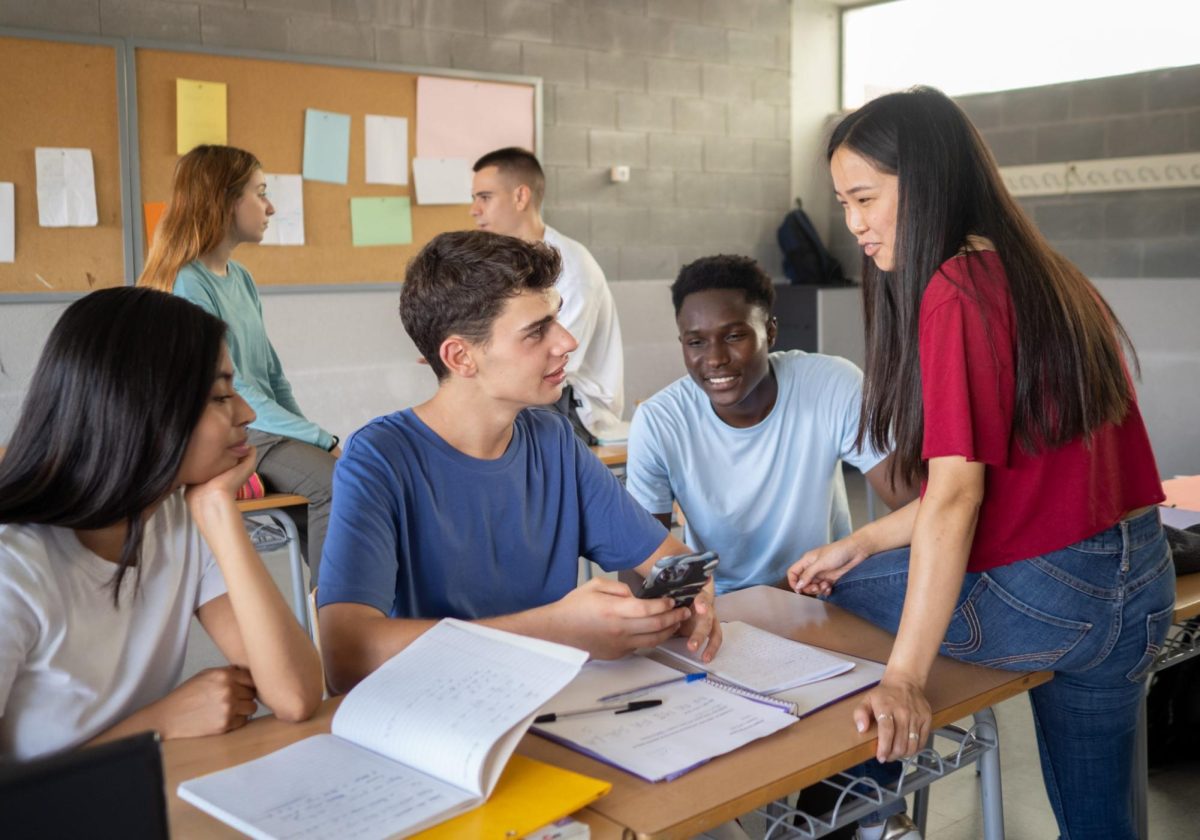
By senior year, most students have had plenty of experience with group projects—and strong opinions about them. While they are designed to encourage collaboration and teamwork, they do not always reflect those goals in practice.
In theory, group assignments prepare students for real-world situations where working with others is essential. They are meant to build skills like communication, time management, and shared responsibility. However, the reality is often more complicated.
A common issue is uneven effort among group members. Many students have experienced situations where one or two people take on the majority of the work, while others contribute very little. This can happen during class, when students become distracted, or outside of school, when deadlines approach and responsibility falls on those who are most motivated to complete the assignment.
This imbalance becomes more frustrating when all group members receive the same grade, regardless of individual contribution. When effort is not accurately reflected, it can take away from the purpose of the assignment and discourage students from fully engaging in future group work.
At the same time, group projects are not always negative. When responsibilities are clearly defined and all members contribute, they can be both productive and rewarding. These experiences show that group work can be effective when there is accountability and mutual effort.
There are also ways to improve the process. Assigning specific roles, incorporating peer evaluations, and providing more structured check-ins could help ensure that work is distributed more evenly. These adjustments would allow group projects to better reflect both teamwork and individual effort.
Ultimately, group projects are likely to remain a part of the high school experience. While they may not always be perfect, they offer an opportunity to develop important skills that extend beyond the classroom. When approached thoughtfully, they can help students learn how to collaborate more effectively and prepare for future academic and professional environments.